
A young woman, who may have been self-treating vaginal discharge walks into my consulting room, closes the door firmly behind her, looks down at her hands, and lowers her voice to a whisper:
“Doctor, I have abnormal vaginal discharge, probably an infection. I’ve taken antibiotics three times this month, but it won’t go away.”
When I examine her or ask detailed questions, two things almost always happen. Either she has completely normal physiological fluids that she has mistaken for disease, or she is dealing with abnormal vaginal discharge caused by an imbalance that she has accidentally made worse through douching, herbal concoctions, or self-prescribed antibiotics.
Vaginal health remains shrouded in secrecy, shame, and aggressive marketing from beauty and herbal “wellness” vendors.

Let us clear the confusion. Here is a doctor’s honest, evidence-based guide to understanding your body: what is healthy, what signals abnormal vaginal discharge, the common causes, and when you must see a doctor.
1. The Self-Cleaning Mechanism: What Does Normal and Abnormal Vagina Discharge Look Like?
Before we talk about infection, you must understand a fundamental biological truth: your vagina is a self-cleaning organ.
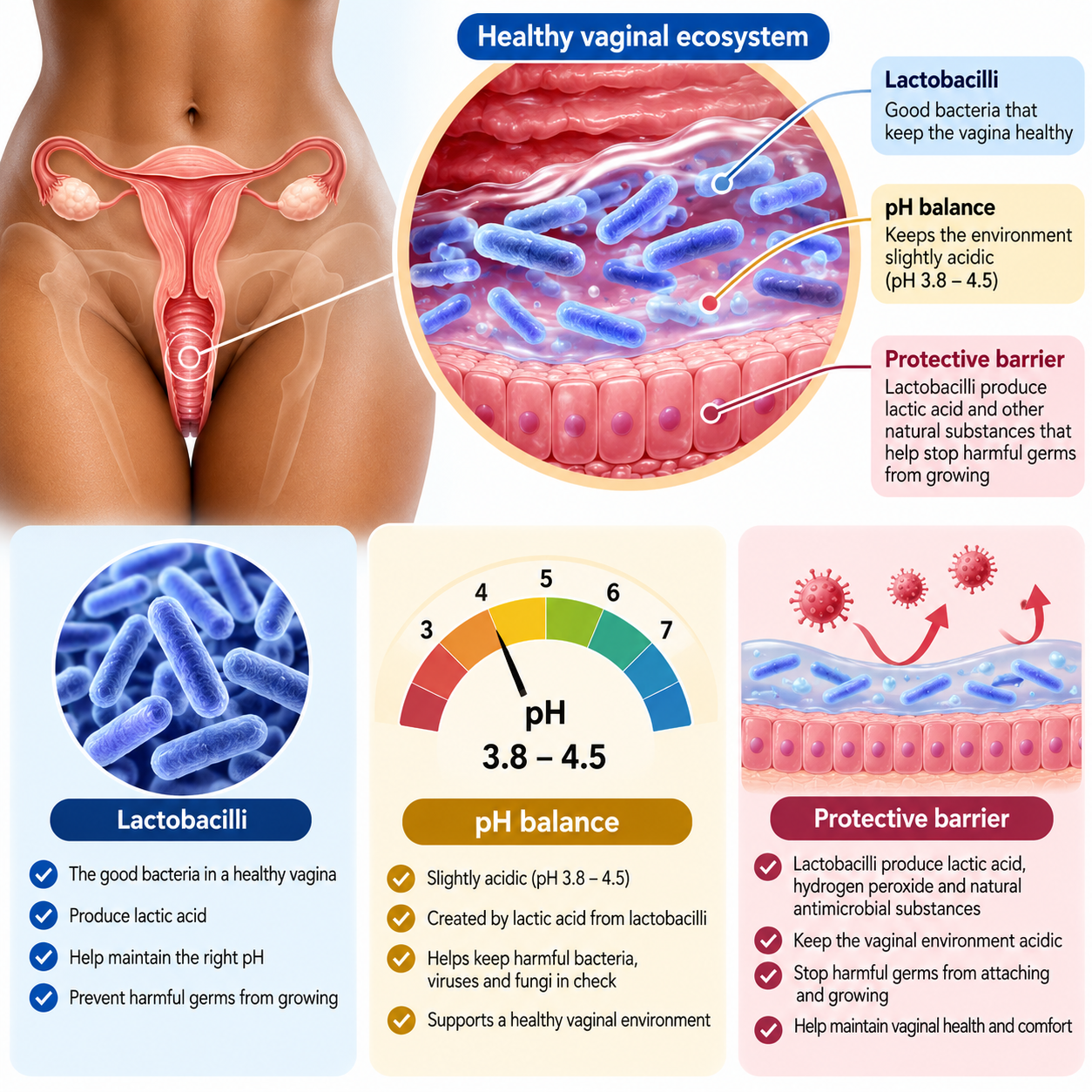
Just as your eyes produce tears to clean and lubricate themselves, the glands in your cervix and vaginal walls constantly produce small amounts of fluid. This fluid carries away dead cells, debris, and foreign microorganisms, maintaining a healthy, acidic environment dominated by beneficial bacteria called Lactobacilli.
THE VAGINAL ECOSYSTEM
Healthy Bacteria (Lactobacilli)
▼
Produce Lactic Acid (Maintains pH 3.8 – 4.5)
▼
Keeps Bad Bacteria & Yeast From Overgrowing
Normal discharge characteristics:
- Colour: Clear, cloudy white, or light cream.
- Texture: Watery, thin, stretchy (like raw egg whites during ovulation), or slightly thick and pasty (during the luteal phase before your period).
- Smell: Mild, slightly musky, or metallic (near menstruation)—never foul, rotten, or intensely fishy.
- Volume: Increases naturally during ovulation, sexual arousal, pregnancy, or when using certain hormonal contraceptives.
If your discharge does not itch, burn, smell offensive, or cause pain, it is performing its natural protective job.
2. The Color & Texture Decoder: Identifying Abnormal Vaginal Discharge
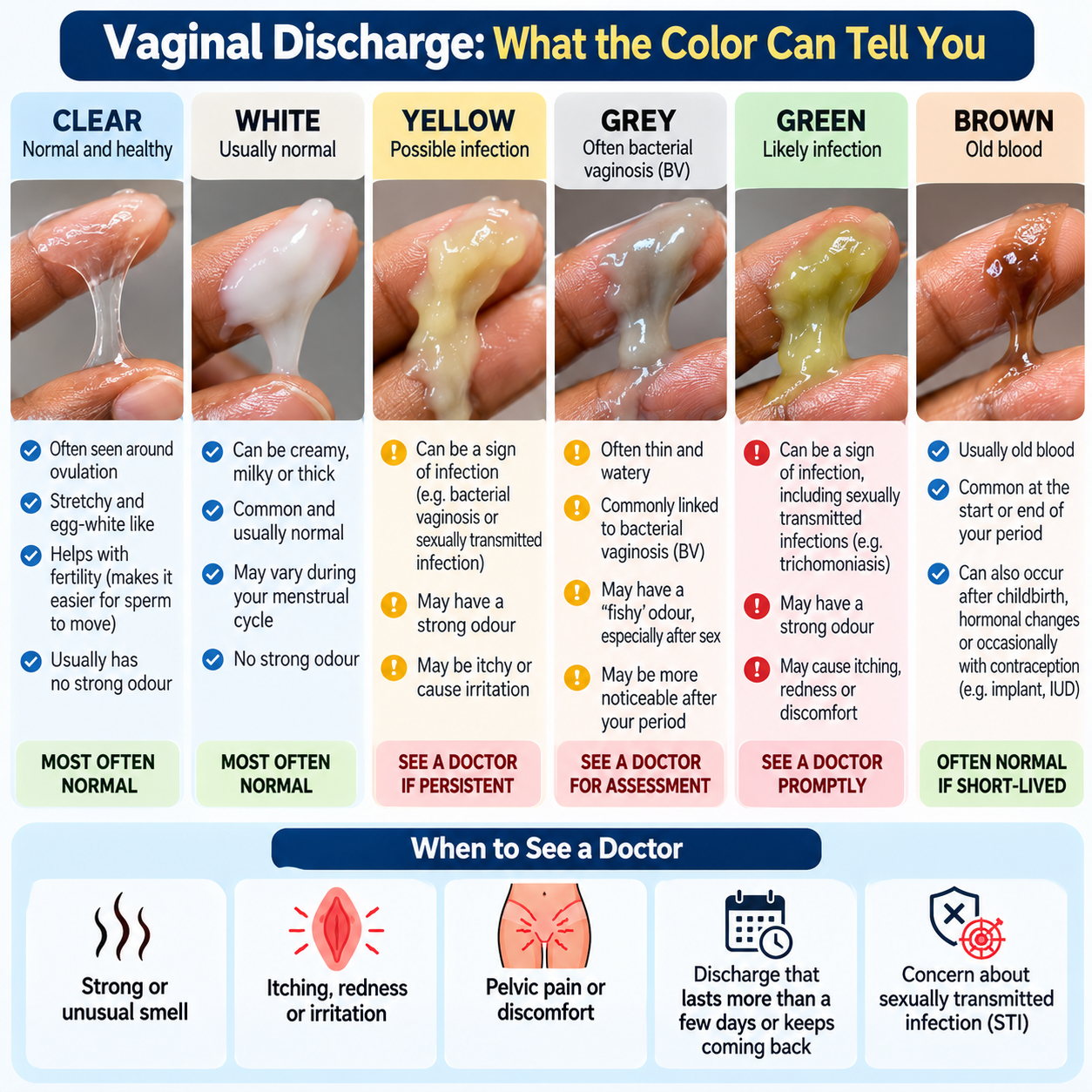
When the delicate bacterial balance shifts, or when a pathogen enters, your body sends clear signals through changes in color, texture, and odor.
Here is how to decode what your body is telling you:
| Color & Texture | Associated Symptoms | Most Common Cause | What You Should Do |
|---|---|---|---|
| Thick, white, curdy (resembles cottage cheese or pap) | Intense itching, burning during urination, red/swollen vulva, NO strong odor | Yeast Infection (Candidiasis) | See a doctor for targeted antifungal treatment. Stop antibiotics. |
| Thin, watery, greyish-white | Distinct fishy odor (especially after sex or washing with soap), mild irritation | Bacterial Vaginosis (BV) | Requires prescription oral/topical medication to restore balance. |
| Yellow, green, frothy | Foul odor, painful urination, severe itching, pain during sex | Trichomoniasis (or other STIs like Gonorrhoea) | Requires laboratory testing (HVS) and partner treatment. |
| Brown or blood-tinged (outside your period) | Pelvic ache, bleeding after intercourse | Hormonal fluctuation, cervical polyps, or early cervical changes | Requires pelvic exam and cervical cancer screening. |
| Thick, cloudy yellow | Deep pelvic pain, burning when passing urine, fever | Chlamydia / Gonorrhoea | Immediate medical evaluation to prevent Pelvic Inflammatory Disease (PID). |
3. What Actually Causes Abnormal Vaginal Discharge?
Understanding the root cause is the only way to treat the issue permanently. The three most frequent culprits I see in clinical practice are:
A. Bacterial Vaginosis (BV)
BV is not a traditional sexually transmitted infection; it is an ecological imbalance. When your protective Lactobacilli drop in number, anaerobic bacteria overgrow. According to the Centers for Disease Control and Prevention (CDC), BV is the most common vaginal condition in women aged 15–44.
B. Vulvovaginal Candidiasis (Yeast Overgrowth)
Candida is a fungus that naturally lives in small amounts in the vagina. When your immune system dips, blood sugar rises, or you take broad-spectrum antibiotics (which kill off the good bacteria), yeast multiplies rapidly, producing thick white discharge and relentless itching.
C. Sexually Transmitted Infections (STIs)
Organisms such as Trichomonas vaginalis, Neisseria gonorrhoeae, and Chlamydia trachomatis directly infect the vaginal and cervical tissues. Research compiled by the World Health Organization (WHO) shows that millions of these infections go undiagnosed because women attempt to self-medicate the symptoms.
4. Dangerous Habits That Worsen Abnormal Vaginal Discharge
In Nigeria and across West Africa, cultural myths around “vaginal cleanliness” cause enormous physical harm. If you are experiencing recurrent issues, check if you are making any of these 3 common mistakes:
1. Douching and “Washing Inside”
Using water, soaps, antiseptic liquids (like Dettol or Savlon), alum, or hydrogen peroxide to flush the inside of the vagina strips away your protective mucous layer and kills your good bacteria. Every time you wash inside, you invite opportunistic pathogens to multiply.
Rule: Wash only the outside (the vulva) with plain, warm water. The inside takes care of itself.
2. “Womb Cleansers” and Herbal Inserts
I regularly treat patients with chemical burns, severe ulcerations, and pelvic scarring caused by inserting herbal preparations, “tightening” powders, garlic cloves, or astringent sponges into their vaginas. These do not “detox” your womb; they cause direct tissue damage.
3. Buying Random “Infection Kits” from Roadside Chemists
Popping two tablets of Ciprofloxacin, Ampiclox, or Metronidazole whenever you feel slight itching does not cure you. In fact, inappropriate antibiotic use kills your beneficial bacteria, triggering a severe secondary yeast infection while building dangerous antibiotic resistance.
5. When Should You See a Doctor Immediately?
You should never feel embarrassed to book a clinical consultation for abnormal vaginal discharge. However, certain “red flag” symptoms require urgent evaluation:
                 RED FLAG SYMPTOMS

   🚩 Foul, rotten, or intense fishy odor
   🚩 Severe pelvic or lower abdominal pain
   🚩 Fever, chills, or unexplained nausea
   🚩 Bleeding between periods or after sex       │
   🚩 Blisters, sores, or ulcers around the vulva │
   🚩 Burning pain every time you urinate         │
If you experience lower abdominal pain combined with unusual discharge, you may be developing Pelvic Inflammatory Disease (PID). Untreated PID can cause scarring in the fallopian tubes, leading to chronic pelvic pain, ectopic pregnancy, and long-term fertility challenges.
6. What to Expect at the Doctor’s Office
Many women postpone their visit because they fear an invasive or painful procedure. In reality, evaluating abnormal vaginal discharge is simple, fast, and routine:
- A Thorough Medical History: Your doctor will ask about your cycle, symptoms, hygiene habits, and sexual history in total confidentiality.
- A Gentle Speculum Examination: The doctor visualises the vaginal walls and cervix to check for inflammation, discharge characteristics, and cervical health. (If you are due for your routine Pap smear screening, it can often be scheduled during this period once active acute infections are cleared).
- High Vaginal Swab (HVS) & Microscopy: A sterile cotton swab takes a small sample of fluid. This is analyzed under a microscope or cultured in the laboratory to identify the exact organism responsible (bacteria, yeast, or protozoa).
- Targeted Treatment: Once the precise culprit is identified, you receive the exact antifungal, antibacterial, or antiparasitic medication needed—eliminating the problem at its source.
The Doctor’s Final Word
Your body is not dirty, and having abnormal vaginal discharge is not a moral failure or something to hide in shame. It is simply a medical signal that your vaginal ecosystem needs support.
Stop suffering in silence, stop wasting money on unverified herbal concoctions, and stop taking random antibiotics that leave you worse off. Book an appointment with a qualified medical professional, get an accurate swab test, and give your body the exact care it deserves.
Take Charge of Your Reproductive Health Today
- Stay on top of all essential tests: Download my free comprehensive resource: [The Busy Woman’s Complete Health Screening Checklist (Ages 20 – 60)] Instant PDF Download
Read related insights on women’s preventive wellness Pap Smear or HPV Screening Here
(Medical Disclaimer: This article is strictly for educational purposes and does not constitute individual medical diagnosis or treatment. Always consult a qualified medical doctor for personalized clinical care.)