
Kunle got his diagnosis on a Tuesday afternoon in a general hospital in Ibadan. Fasting blood sugar of 189. The doctor had six other patients waiting and gave him four minutes: cut sugar, exercise, take your medication, come back in a month.
Kunle went home and did the only thing that made sense to him. He stopped eating rice. Then he stopped eating swallow. Then, three weeks later, at his cousin’s wedding, he ate a full plate of jollof rice, pounded yam, and two bottles of Coke because he had “been managing it” and felt he deserved it. His blood sugar that night was the highest it had been since diagnosis.
Kunle’s mistake wasn’t a lack of discipline. Nobody had actually explained to him what diabetes does inside his body, which foods genuinely mattered, or what living with it day to day was supposed to look like. This is the gap most Nigerians diagnosed with diabetes fall into, and it’s the reason so many end up managing fear instead of managing diabetes.
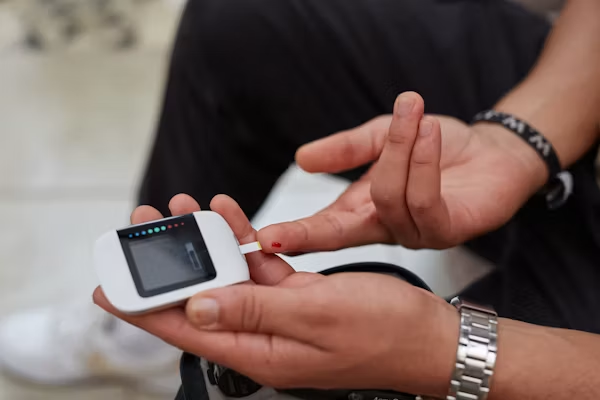
The Reality of Diabetes in Nigeria
Diabetes is no longer a rare diagnosis in Nigeria. It’s showing up earlier, in people in their 30s and 40s, and it’s showing up in households that have never had a case before. Part of this is genetics. A larger part is the shift in how Nigerians eat and move: more refined carbohydrates, less physical activity than a generation ago, and a healthcare system where the average consultation gives you a prescription but rarely gives you a plan.
That gap between “you have diabetes” and “here’s exactly what to do about it” is where confusion, fear, and misinformation take over. It’s also where family members start recommending herbal concoctions, WhatsApp forwards replace medical advice, and otherwise sensible people stop eating entire food groups out of panic rather than understanding.
The Warning Signs Most People Miss
Frequent urination and constant thirst are the two signs everyone has heard of. By the time those appear, elevated blood sugar has often been quietly present for months. There are earlier, subtler signs that get dismissed as heat, stress, or unrelated minor complaints:
- Boils or skin infections that keep recurring
- A small cut or wound that takes weeks longer than normal to heal
- Repeated vaginal yeast infections
- Blurred vision that comes and goes
- Persistent fatigue that sleep doesn’t fix
- Erectile dysfunction, especially from the mid-30s onward
- Tingling or burning sensations in the feet or hands
- Dark, velvety patches of skin at the neck or armpits
If two or more of these sound familiar, in yourself or someone in your household, the next step isn’t worry. It’s a fasting blood glucose test, ideally this week rather than “sometime soon.”
Eating Nigerian Food Without Fear
Here is the part most advice gets wrong: a diabetes diagnosis does not mean giving up eba, rice, or pounded yam. It means understanding what those foods do to your blood sugar and adjusting portion and pairing, not eliminating them out of fear.
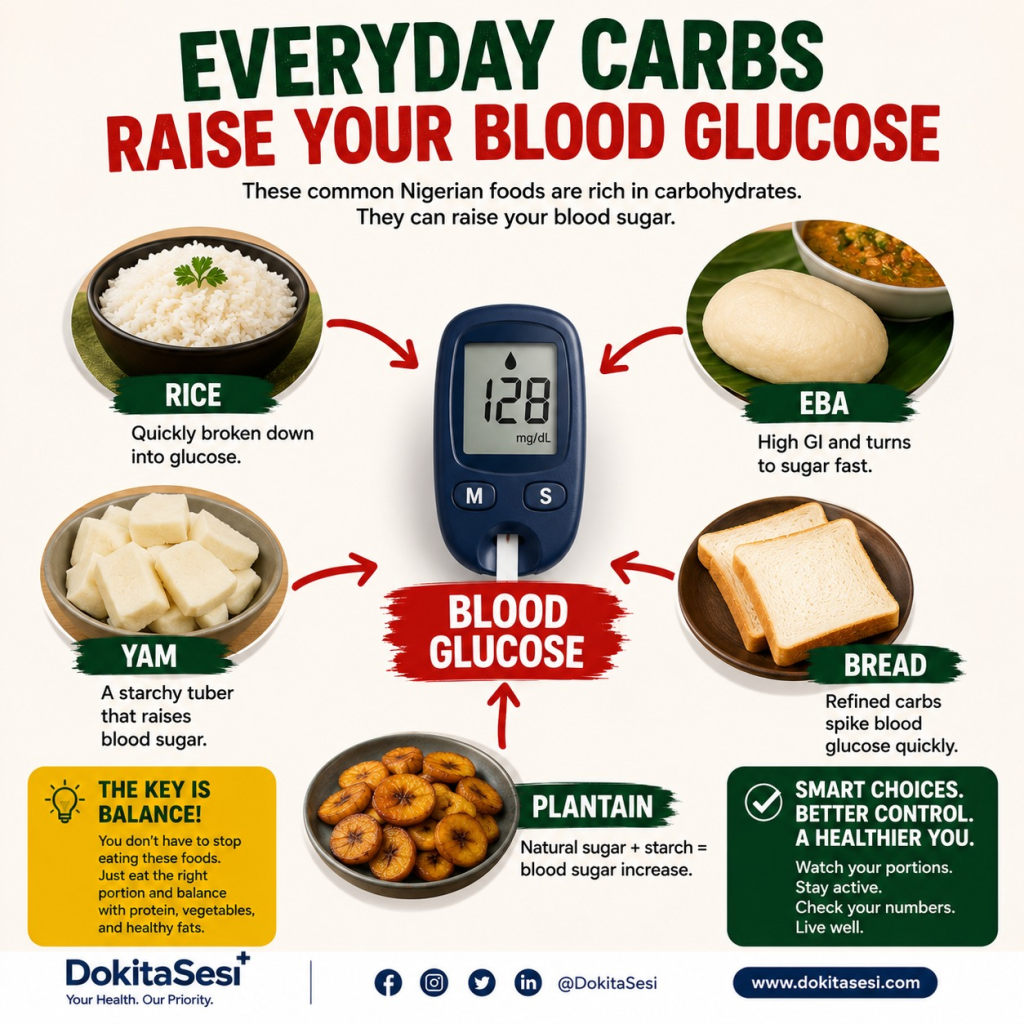
A few practical rules make more difference than any single food restriction:
Eat protein before your carbohydrate, not after. Starting a meal with protein slows how quickly sugar from the carbohydrate portion enters your bloodstream.
Never eat a large carbohydrate portion alone. Rice, eba, or pounded yam eaten with a substantial protein and vegetable soup behaves very differently in your body than the same portion eaten on its own.
Walk for fifteen minutes after your largest meal of the day. This single habit measurably lowers the blood sugar spike that follows eating, and it costs nothing.
Not all Nigerian staples affect blood sugar equally. Beans and vegetables have a low impact and can be eaten generously. White rice, eba, and pounded yam have a higher impact and are better managed through smaller portions and the pairing habits above, not outright avoidance. Boiled, unripe plantain is a better everyday choice than the ripe, fried version. Knowing this table, rather than guessing, is the difference between eating with confidence and eating with anxiety at every meal.
Medication Is Necessary, But It Is Not Enough on Its Own

Many people treat their prescription as the entire treatment plan. It’s an important piece, but not the whole picture. Four things work together, and neglecting any one of them undermines the other three:
- Medication, taken consistently and at the right time, not just when remembered.
- Nutrition, built around portion and pairing rather than elimination.
- Physical activity, roughly 150 minutes a week of moderate movement, starting from wherever you currently are.
- Sleep and stress management, since both directly affect blood sugar regulation, a fact most patients are never told.
A person who takes their medication perfectly but sleeps five hours a night and manages constant stress with no outlet will often still see poor blood sugar control. This is not a failure of willpower. It’s an incomplete system.
One Thing Every Family Should Know: Hypoglycaemia
Blood sugar can also drop dangerously low, particularly for people on certain medications or insulin. Early signs include sudden sweating, shakiness, confusion, and irritability that seems out of character. Left unaddressed, this can progress to loss of consciousness. Every household with a diabetic member should know these signs and have a fast source of sugar (like glucose tablets or juice) within reach, because the correct response in the first few minutes matters more than any hospital visit that comes after.
What to Do Before You Reach the Hospital
If you or a family member experiences sudden confusion, difficulty speaking, one-sided weakness, chest pain, or a wound on the foot that is rapidly worsening, these are emergency signs that require immediate medical attention, not home management. Knowing the difference between “manage this at home tonight” and “get to a hospital now” is one of the most protective pieces of knowledge a diabetic household can have.
Living Well Is a System, Not a Restriction
The families who manage diabetes well in Nigeria are not the ones who eliminated every food they love. They’re the ones who understood the full system: the warning signs, the numbers, the food pairing habits, the medication, the movement, and the emergencies to watch for. That understanding is what turns a frightening diagnosis into a manageable daily routine.
This is exactly the gap Living Well With Diabetes in Nigeria was written to close. It’s a plain-language, Nigerian-specific guide covering everything above in far more depth: how to read your own blood sugar numbers, a full food guide ranking the meals already on your table, the herbal preparations that are quietly dangerous when combined with your medication, and a 7-day plan to put all of it into practice starting the day you open the book.
Get your copy of Living Well With Diabetes in Nigeria here.
Dr. Lukman Olusesi is a public health physician and general medical practitioner with over 27 years of clinical and public health experience in Nigeria. He consults at the LASU Epe Campus Health Centre and writes on practical, Nigerian-specific health education through DokitaSesi.