
If you were told “diabetes has no cure, you’ll be on drugs for life,” I understand why you believed it. That is what most of us were taught in medical school too, and for a long time, it was the standard message given to patients across Nigeria.
But the science has moved. Today, we know that for a significant number of people with type 2 diabetes, remission is achievable. Not a myth. Not a scam. Not something only available to people abroad with access Nigerians don’t have. Remission, meaning normal blood sugar without needing diabetes medication, is now a documented, replicable outcome, and I have watched patients in my own practice get there.
This article breaks down what remission actually means, why it works, and the specific methods that give you the best chance, in a Nigerian context, with Nigerian food, Nigerian budgets, and Nigerian life.
What “Remission” Actually Means (And What It Doesn’t)
Let’s be precise, because this is where a lot of misinformation causes harm.
Remission means your blood sugar (HbA1c) stays below the diabetic range for at least three months without diabetes medication. It does not mean your pancreas is “cured” forever, and it does not mean you can go back to your old eating pattern with no consequences. Diabetes can return if the underlying drivers return. Remission is a managed state you maintain, not a one-time fix you walk away from.
This distinction matters because I want you walking into this with realistic expectations, not false hope that collapses the first time you slip.
Why Remission Is Possible: The Simple Science
Type 2 diabetes, in most cases, is driven by two things working together: excess fat around the liver and pancreas, and insulin resistance that builds from years of that fat load plus lifestyle patterns. When you meaningfully reduce that fat, the pancreas often regains its ability to produce and respond to insulin properly.
This is why the DiRECT trial (Diabetes Remission Clinical Trial), one of the most respected studies on this subject, is worth paying attention to. Researchers at Newcastle and Glasgow Universities found that almost half of participants (46%) were in remission at one year, and 36% at two years. More importantly, among those who lost more than 10kg, three-quarters were in remission at both one and two years. This wasn’t a fringe study. It was a properly conducted clinical trial, and the pattern has been replicated elsewhere.
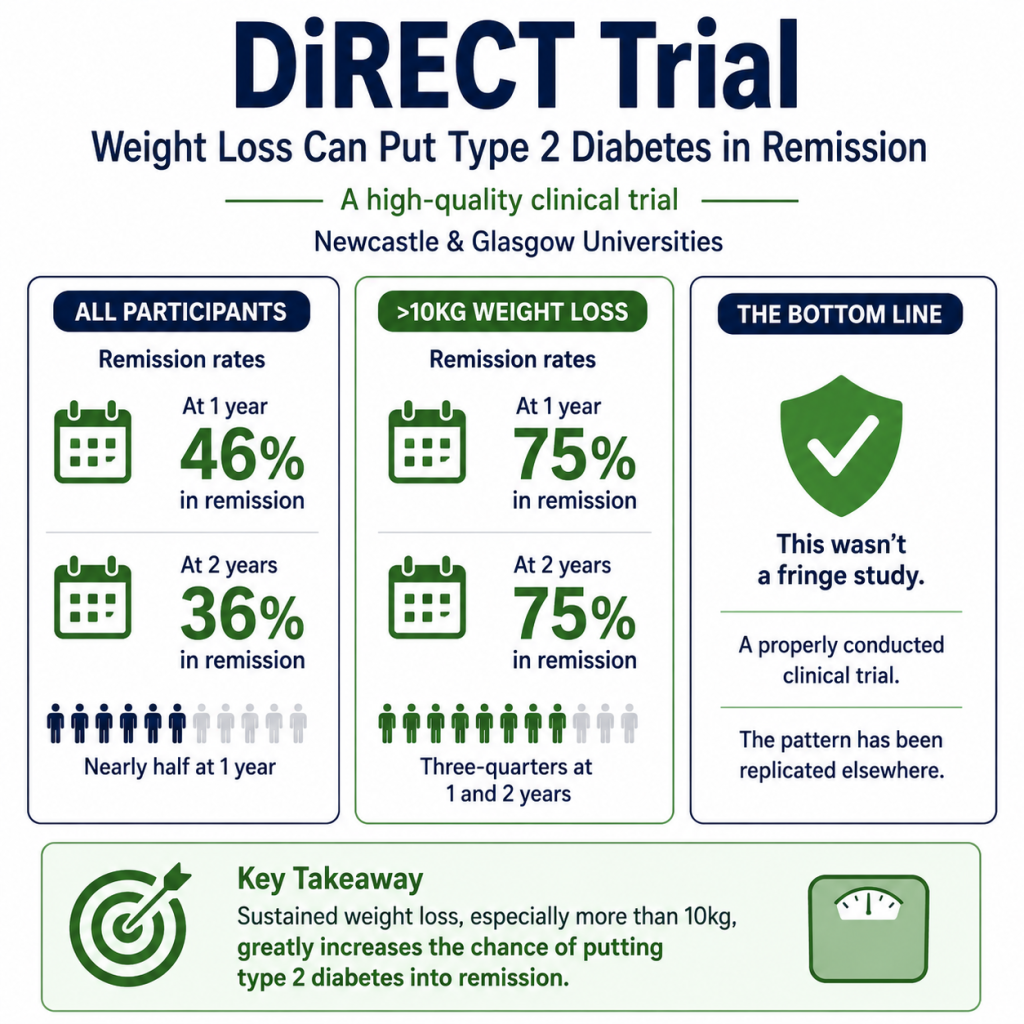
The takeaway: remission is not about a magic food or a miracle herb. It is about sustained, structured fat loss and metabolic change, achieved the right way.
The Working Methods: What Actually Moves the Needle
1. Structured Weight Loss (Not Random Dieting)

The evidence is consistent that a loss of roughly 10-15kg, achieved gradually and safely, is where remission becomes realistic for most people carrying excess weight. This is not about starving yourself or skipping meals randomly. It is about a structured calorie and portion approach, sustained over months, not days.
2. Choosing the Right Nigerian Carbohydrates
This is where most people get it wrong, and where I spend the most time correcting misinformation in my practice. It is not that “swallow is bad” or “rice must be avoided forever.” It is about glycemic load, which is portion size combined with how fast a food raises your blood sugar.

Some practical shifts that make a real difference:
- Choosing portions using the hand method rather than “eating until full”
- Pairing carbohydrate-heavy swallows with generous vegetables and protein to slow sugar absorption
- Understanding which of our staples (garri, amala, semo, rice, beans) have a lower glycemic load when portioned correctly, versus which need tighter control
- Spacing meals to avoid the blood sugar spikes that come from skipping meals then overeating later
3. Consistent Physical Activity
You do not need a gym membership. Thirty minutes of brisk walking, five days a week, has strong evidence behind it for improving insulin sensitivity. What matters is consistency, not intensity.
4. Sleep and Stress Management
Poor sleep and chronic stress both raise cortisol, and cortisol drives blood sugar up independent of diet. This is frequently ignored in diabetes advice, and it shouldn’t be.
5. Monitoring That Keeps You Honest
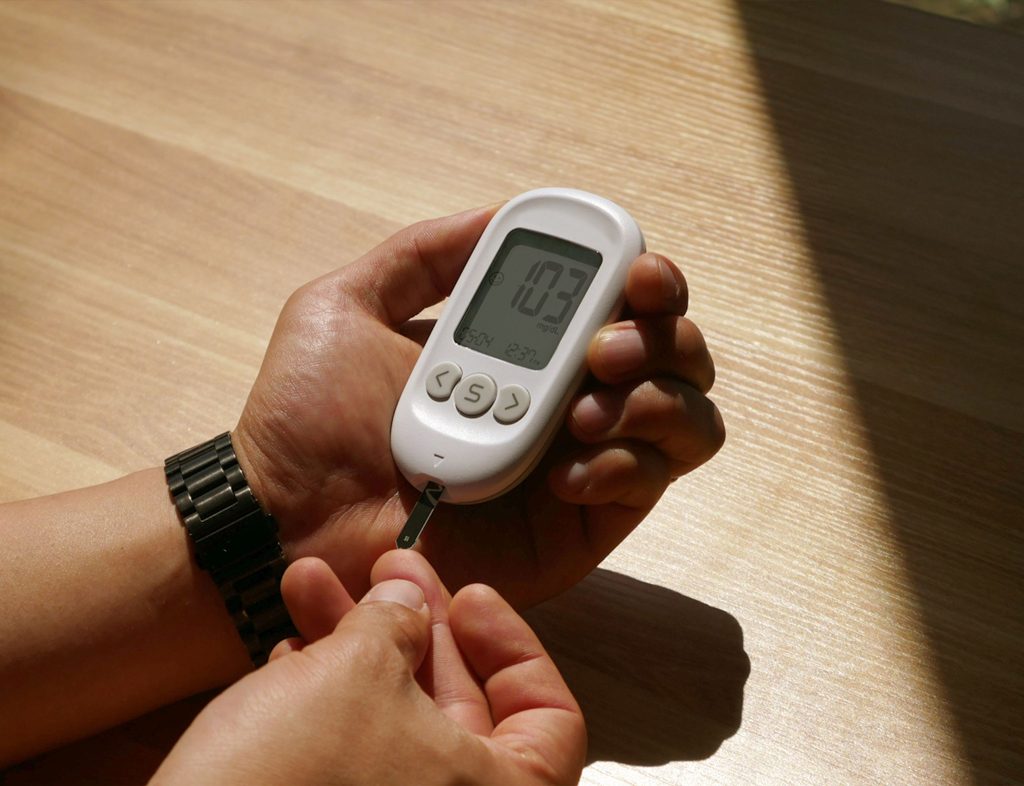
You cannot manage what you don’t measure. Regular blood sugar checks, not guesswork, tell you what’s actually working for your body, because everyone responds slightly differently to the same foods.
Why Most People Fail at This Alone
I’ll be direct with you: information is not your problem. You have probably read plenty about diabetes already. What’s missing is a structured, Nigeria-specific plan that tells you exactly what to eat, how much, when, and how to adjust it to your own body, budget, and culture, so you’re not guessing or trying to translate advice written for an American or European diet onto a Nigerian plate.
This is exactly why I wrote Living Well With Diabetes in Nigeria.
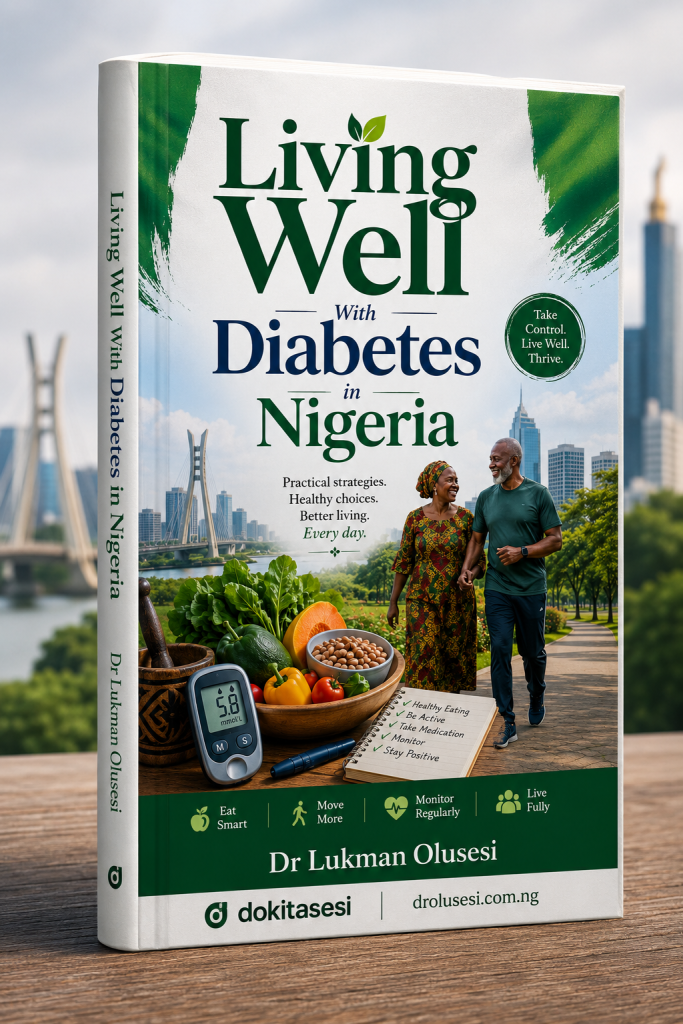
Living Well With Diabetes in Nigeria: Your Practical Starting Point
This guide was built from real clinical experience managing diabetes in Nigerian patients, not generic internet advice. Inside, you’ll find:
- A clear explanation of how remission works and how to pursue it safely
- Nigerian food choices explained with the science behind them, not fear-based rules
- A realistic path that fits Nigerian food culture, family meals, and budgets
- Guidance on working with (not against) your doctor’s monitoring and medication plan
Living Well With Diabetes in Nigeria is available now for ₦6,500 via Paystack.
If you’re ready to move from “confused about what to eat” to “I have a clear plan,” this is your starting point.
Pair It With: The Nigerian Diabetic Food Companion
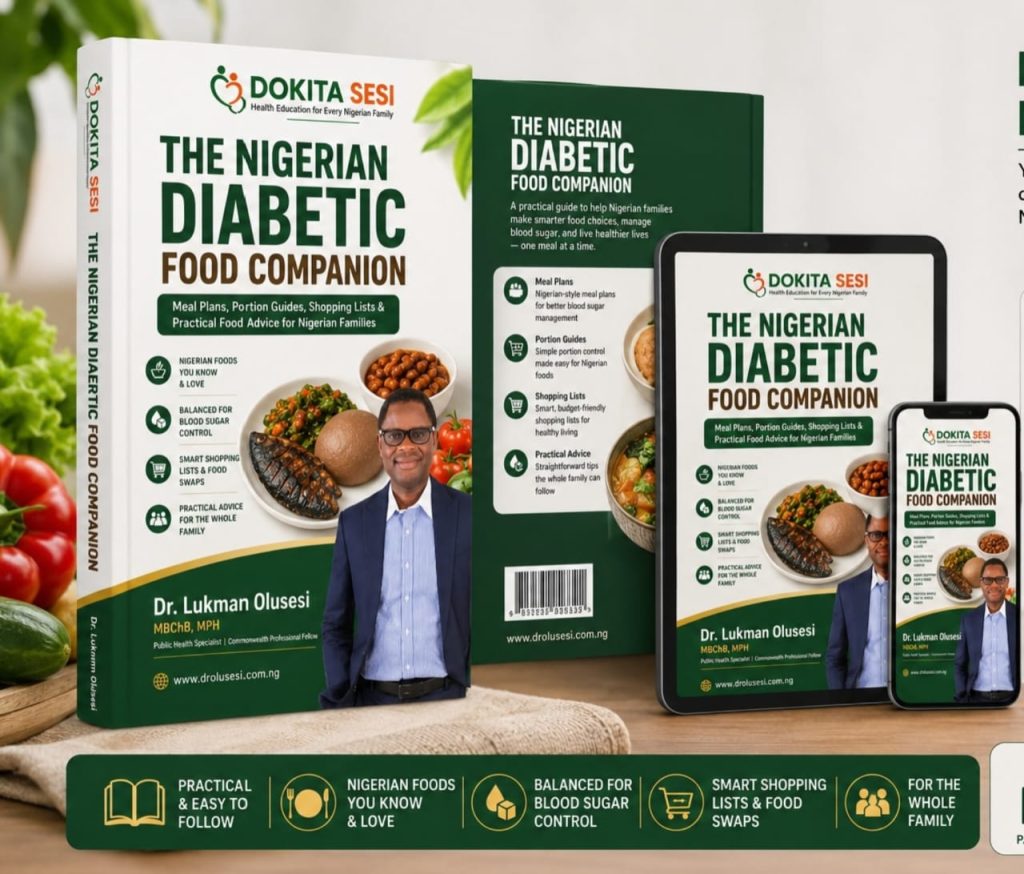
Once you understand the “why,” you need the “what do I actually cook this week.” The Nigerian Diabetic Food Companion (₦3,500) is the practical companion to the main guide, giving you a color-coded traffic light system for 35+ Nigerian staples, a 7-day meal plan, a market shopping list, and guidance for navigating bukas and social occasions without derailing your progress.
Get both together and you have the complete system: the science and the strategy, in one place.
The Bottom Line
Diabetes remission is not hype. It is documented, achievable, and within reach for many Nigerians, but it requires a structured approach, not scattered advice from different sources pulling you in different directions. You deserve a plan built for your body, your food, and your life, not a translated version of someone else’s.
Start with Living Well With Diabetes in Nigeria today, and give yourself the clarity and structure that random online advice has not given you.
Dr. Lukman Olusesi, MBChB, MPH, is a public health physician with over 27 years of clinical experience in Nigeria.